Tantra Yoga

The Path of Sacred Union

"Tantra Yoga is not just a practice; it is the sacred science of transformation—where the mundane becomes divine, and the self merges with the infinite. Rooted in the ancient wisdom of the Vigyan Bhairav Tantra and the Tantraloka, it is the authentic path of awakening through energy, devotion, and conscious living. Embrace Tantra, and you embrace the union of Shiva and Shakti within—the ultimate truth of existence."

~ YogX | The Path of Sacred Awakening~

ॐ यत्र योगेश्वरः कृष्णो यत्र पार्थो धनुर्धरः।
तत्र श्रीर्विजयो भूतिः ध्रुवा नीतिर्मतिर्मम॥

"Where there is union (Yoga), there is abundance, victory, and eternal wisdom."
(Bhagavad Gita 18.78)

Introduction to Tantra Yoga

Tantra Yoga is an ancient spiritual practice that transcends conventional yoga by integrating rituals, meditation, mantra, and energy awakening to achieve higher consciousness. Unlike traditional yoga, which often emphasizes renunciation, Tantra Yoga embraces life’s energies—both material and spiritual—to attain self-realization.

Rooted in the philosophy of “expansion beyond limitations,” Tantra Yoga unites the individual soul (Jivatma) with the universal consciousness (Paramatma). It works with the subtle energy channels (Nadis) and chakras to awaken Kundalini Shakti, the dormant spiritual energy.


The Concept of Two Powers

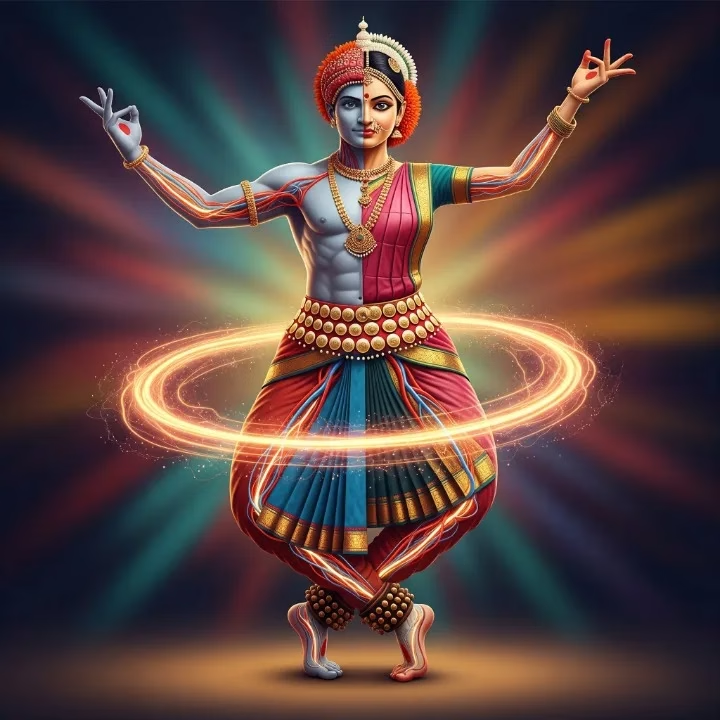
 Ardhanarishvara

Tantra Yoga recognizes the duality of existence:

  • Shiva (Masculine) – Stillness, awareness, pure consciousness.

  • Shakti (Feminine) – Dynamic energy, creativity, manifestation.

Ardhanarishvara (Half Shiva, Half Shakti) symbolizes their inseparable union.


Energy Flow in the Body

  • Right Side (Pingala Nadi) – Solar, masculine, logical energy.

  • Left Side (Ida Nadi) – Lunar, feminine, intuitive energy.

Balancing these through Tantra Yoga leads to self-awakening and optimal body function.

Ancient References & Sanskrit Shlokas

Tantra Yoga finds its origins in sacred texts like:


  • Vigyan Bhairav Tantra – A dialogue between Shiva and Devi on 112 meditation techniques.

  • Tantraloka by Abhinavagupta – A comprehensive text on Kashmir Shaivism.

  • Kularnava Tantra – Discusses Kundalini awakening and spiritual practices.

शिवः शक्त्या युक्तो यदि भवति शक्तः प्रभवितुं
न चेदेवं देवो न खलु कुशलः स्पन्दितुमपि।

“Shiva united with Shakti becomes empowered to manifest;
Without her, even the Lord cannot stir.”

This shloka highlights the inseparable union of Shiva (consciousness) and Shakti (energy)—the core principle of Tantra Yoga.

Tantra at YogX

Types of Tantra Yoga

  1. Mantra Tantra – Uses sacred sounds (Bij Mantras) for energy awakening.

  2. Yantra Tantra – Meditative focus on geometric symbols (Sri Yantra).

  3. Kundalini Tantra – Awakening the primal energy through chakra work.

  4. Kaula Tantra – Ritualistic practices for spiritual and material harmony.

Tantra yoga
Tantra Yoga is all about power flow.

Healing Benefits: Body, Mind & Soul

  • Physical Healing: Balances hormones, improves vitality, and enhances energy flow.

  • Mental Clarity: Reduces stress, anxiety, and emotional blockages.

  • Spiritual Awakening: Expands consciousness and deepens self-awareness.

Tantra Yoga Sadhana: Practice & Discipline

What is Tantra Yoga Sadhana?
It is a dedicated spiritual practice to awaken inner energy through mantra, yantra, and meditation.

How to Perform?

  1. Purification (Shuddhi): Cleanse body and mind through fasting or mantra chanting.

  2. Nyasa (Energy Placement): Touch body parts while chanting mantras to invoke divine energy.

  3. Dhyana (Meditation): Focus on the divine union of Shiva-Shakti within.

Timing & Duration

  • Best Time: Brahma Muhurta (3:30 AM – 5:30 AM) or twilight (Sandhya).

  • Duration: Start with 20-30 mins daily, gradually increasing.

Why Learn Tantra Yoga?

  • Holistic Growth: Balances physical, emotional, and spiritual health.

  • Enhanced Relationships: Cultivates deeper connections through sacred awareness.

  • Self-Realization: Awakens inner power and divine consciousness.

How to Practice Tantra Yoga in Daily Life

  1. Morning Rituals: Chant “Om Namah Shivaya” to invoke divine energy.

  2. Breathwork (Pranayama): Practice Nadi Shodhana to balance masculine (Pingala) and feminine (Ida) energies.

  3. Meditation: Visualize energy rising from the base (Muladhara) to the crown (Sahasrara).

  4. Sacred Touch: Perform self-massage (Abhyanga) with awareness to honor the body as a temple.

Join YogX’s Tantra Yoga sessions to experience the sacred union of energies and elevate your spiritual journey!

ॐ शिवाय नमः
Om Shivaya Namah

Read Our Articles

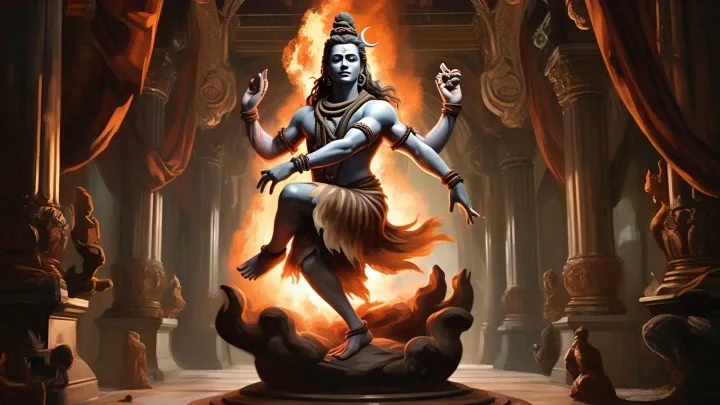
Tandava

Tandava

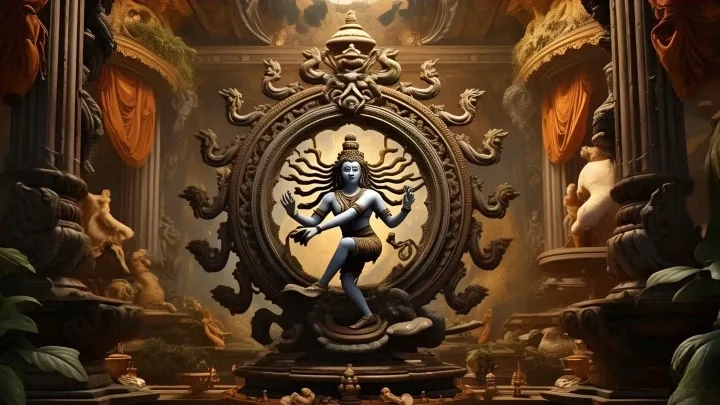
Nataraja

Nataraja